

Blog

Before your appointment
Our pharmacist can go over how alprazolam works and what not to mix it with, and help you jot down a few questions for your prescriber about How to Get Prescribed Xanax. Call, or just come in.
General information, not advice about your own case. Your doctor knows your history; we’re writing for everyone.
Some people start looking into this after months of bad sleep. Others after a panic attack in the middle of a grocery store, bad enough that they haven’t been back since. Either way, they want it fixed, and Xanax is the name they know.
There isn’t a trick for getting a specific drug prescribed, and walking in set on one usually makes the visit harder. What your prescriber needs is the full, honest story of what’s been happening. With that, they can find something that suits you. Sometimes that’s alprazolam.
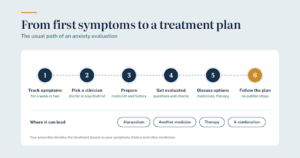
Step 1: Keep Track of Your Symptoms
Spend a week or two writing down what you notice before you see anyone. It can be messy, just a line or two in your phone at the end of each day.
Include the physical stuff, like a pounding heart, feeling short of breath, tight shoulders or bad sleep. Put down the mental stuff too: the worrying, the dread. Note when it shows up. Is it every morning before work? Only at night? Does it seem to come from nowhere? And note how long it hangs around, because ten awful minutes is a different problem from a low hum of worry all day.
It’s also worth writing down what anxiety has cost you lately. That might be sick days, plans you canceled, or a store you’ve stopped going into. If you’ve already tried something, whether that’s a medicine, therapy, exercise or less coffee, write down how it went.
A prescriber can use all of this to sort out whether you’re dealing with generalized anxiety disorder, panic disorder, or something that only looks like anxiety.
Step 2: Decide Who to See
Plenty of people start with their regular doctor, and a big share of anxiety in the U.S. gets treated in primary care. Your doctor already has your chart, which helps.
A psychiatrist is worth considering if things are severe, if you’ve tried treatment before without much luck, or if there’s more going on, like depression or bipolar disorder. Psychiatrists are medical doctors who focus on mental health.
Psychiatric nurse practitioners and physician assistants treat anxiety as well. Whether they’re allowed to prescribe controlled drugs such as alprazolam depends on their state and their DEA registration.
Then there are psychologists and licensed counselors. They don’t usually prescribe (in most states they can’t), but they provide therapy, which is a first-line treatment for anxiety disorders in its own right.
Whoever prescribes alprazolam has to hold a DEA registration and be allowed by state law to prescribe controlled medicines.
Step 3: Get Ready for the Appointment
Take your notes. Take a list of every medicine you use too, with doses, including the over-the-counter ones and any vitamins or supplements. People forget those more than anything else.
You’ll probably be asked about your health history. Breathing problems like sleep apnea or COPD are relevant, as are liver or kidney disease, heart problems and thyroid issues. So is any history of depression or thoughts of harming yourself. If you’re pregnant, trying to be, or breastfeeding, bring that up as well.
And be honest about drinking and drug use, cannabis included. Nobody’s asking to judge you. Alprazolam plus alcohol or opioids can slow your breathing to a dangerous level, and your prescriber can’t plan around a risk they don’t know about.
Step 4: What to Expect at the Evaluation
Most of it is conversation. You’ll talk about your symptoms, your history and how your days are going. A lot of clinicians also hand you a short questionnaire, like the GAD-7 for anxiety or the PHQ-9 for depression. It’s a quick way to get a baseline so they can tell later whether treatment is helping.
They might also want to rule out a physical cause. Plenty of things can mimic anxiety closely, including an overactive thyroid, a heart rhythm problem, too much caffeine and certain stimulant medicines. Depending on your history, you could be sent for blood work or an ECG, or just have a physical exam.
Because alprazolam is a controlled drug, there’s some extra checking. The FDA label asks prescribers to gauge each person’s risk of misuse and addiction before prescribing and during treatment. Many use a standard screening form for this.
Almost every state also runs a prescription drug monitoring program, usually called a PDMP. It shows the controlled prescriptions filled in your name, and in many states the prescriber is required to look. Expect questions about opioids, sleep aids and anything else that makes you drowsy.
Everyone gets these checks. They’re routine for controlled medicines and have nothing to do with how you come across.
Step 5: Talk Through Your Options
Go ahead and ask about Xanax by name if it’s on your mind. It also helps to ask what else could work, and what each choice would mean for you.
For long-term treatment of generalized anxiety disorder or panic disorder, a lot of guidelines point first to SSRI or SNRI antidepressants. They’re slow. It can be several weeks before you feel the full benefit. But they don’t cause the kind of physical dependence that benzodiazepines can.
Therapy is the other main option. Cognitive behavioral therapy (CBT) has good evidence for both conditions, and people often keep the benefit after they’ve stopped going.
Two other medicines sometimes come up. Buspirone is approved for generalized anxiety disorder and isn’t a benzodiazepine. Hydroxyzine is an antihistamine, and it’s approved for short-term relief of anxiety symptoms.
So where does alprazolam fit? Usually it’s used for shorter stretches or particular situations. It can also cover the few weeks it takes an antidepressant to start working.
Why a Prescriber Might Suggest Something Else
Alprazolam is riskier for some people than for others. Opioid use is one of the main concerns, and so is any past trouble with alcohol or drugs. Sleep apnea and other breathing problems count too. Older adults fall and get confused more easily on it.
Prescribers are also careful during pregnancy and breastfeeding, and with depression, particularly if there have been thoughts of self-harm. Sometimes the reason is simply that another medicine you take interacts with it. Or you’ll probably need treatment for a long time, and the dependence risk adds up.
If your prescriber recommends something else, ask them to explain. You’re entitled to a second opinion, too.
Related: Xanax for anxiety: what it can and can’t do
Step 6: If You’re Prescribed Alprazolam
Before you head out, make sure you’re clear on your dose and when to take it. Ask how long they expect you to be on it and when they want to see you again. The label tells prescribers to keep the dose as low as possible and to check regularly whether it’s still needed.
Some offices ask you to sign a controlled-substance agreement. It usually says you’ll fill the prescription at one pharmacy, you won’t share it, and you’ll come back for follow-ups.
Federal law puts limits on the prescription. A Schedule IV prescription can be refilled five times at most, and only within six months of the day it was written. Then you need a new prescription. In many states, and under Medicare Part D, controlled prescriptions generally have to be sent to the pharmacy electronically. Some pharmacies will also ask to see ID when you pick it up.
Keep your follow-up appointments. Your prescriber uses them to see how the medicine is working, change the plan if needed, and hear about side effects. If you decide to come off it someday, that’s where the taper gets planned.
Don’t stop suddenly. Once you’ve been taking it regularly, quitting all at once can bring on withdrawal, which can include seizures. Talk to your prescriber before you change your dose.
Getting a Prescription Through Telehealth
Before 2020, a federal law called the Ryan Haight Act generally required at least one in-person exam before a controlled drug could be prescribed remotely. During the COVID-19 emergency, the DEA and HHS relaxed that requirement. They’ve extended the change several times since.
For now, a DEA-registered clinician can prescribe Schedule II to V drugs, alprazolam among them, after an audio-video visit, even if you’ve never met in person. Federal and state rules still apply to the prescription. This extension is set to end on December 31, 2026, and the DEA is working on permanent rules.
A real telehealth service will still do a proper evaluation and check the PDMP. It may also decide not to prescribe a controlled drug. Be suspicious of any website that offers Xanax before a clinician has talked with you, or where the “visit” is just a short online form.
Editor’s note: confirm the current DEA telemedicine status before publishing or updating this article.
Stay Away From Online Sellers and Street Pills
Selling Xanax online without a prescription is illegal, and you can’t know what’s actually in those pills. The DEA has warned repeatedly about fake pills made to look like Xanax that contain fentanyl. Even a tiny amount of fentanyl can kill.
A legitimate online pharmacy requires a valid prescription and is licensed in your state. It lists a U.S. address and phone number, and a licensed pharmacist is available to answer questions. The FDA’s BeSafeRx program explains how to check a site, and the National Association of Boards of Pharmacy lists verified pharmacies at safe.pharmacy.
Call 911 right away if someone took a pill that didn’t come from a pharmacy and is now very drowsy, breathing slowly, or can’t be woken.
If You Need Help Right Now
Chest pain, trouble breathing, or symptoms unlike your usual anxiety need a 911 call, not an appointment. A heart problem can feel very much like a panic attack.
If you’re thinking about suicide or hurting yourself, call or text 988 to reach the 988 Suicide & Crisis Lifeline. It’s open 24 hours a day.
Worried about your drinking or drug use, including benzodiazepines? The SAMHSA National Helpline, 1-800-662-4357, is free and confidential, and it’s also open 24 hours a day.
Frequently Asked Questions
Can a primary care doctor prescribe Xanax?
Yes, if they have a DEA registration. Many people are treated for anxiety by their family doctor, and a referral to a psychiatrist is an option if the situation gets more complex.
Can a psychiatrist prescribe Xanax?
Yes. Psychiatrists prescribe anxiety medicines regularly, and alprazolam is one of them when it suits the patient.
Can a nurse practitioner prescribe Xanax?
In many states, yes, provided they’re registered with the DEA and state law allows it. The rules differ quite a bit from state to state.
Can I get Xanax prescribed online?
Under the rules in place through 2026, a licensed clinician can prescribe it after a proper telehealth evaluation. Many choose not to prescribe controlled drugs remotely, though, and that’s their decision to make.
Is it okay to ask my doctor for Xanax by name?
Yes. Your doctor will compare it with other treatments based on your symptoms, your history and your other medicines.
Can you buy Xanax without a prescription?
No. It’s illegal in the U.S., and pills sold that way can be counterfeit. Some have contained fentanyl.
The Bottom Line
Write down your symptoms for a week or two before your visit. See a qualified clinician and tell them everything, including alcohol, drugs and every medicine you take. Ask about all the options, not just one.
That conversation may lead to alprazolam, or to a different plan that fits you better long term. Either is fine if you end up feeling better.
If you have questions about alprazolam or other anxiety medicines, or about how a new prescription fits with the ones you already take, visit our pharmacy or speak with our pharmacist.
References
-
- U.S. Food and Drug Administration. Xanax (alprazolam) tablets, prescribing information (revised 1/2023). Drugs@FDA.
- Drug Enforcement Administration and HHS. Fourth Temporary Extension of COVID-19 Telemedicine Flexibilities for Prescription of Controlled Medications. Federal Register, December 31, 2025.
- Code of Federal Regulations. 21 CFR 1306.22 (refilling Schedule III and IV prescriptions).
- U.S. Food and Drug Administration. BeSafeRx: Know Your Online Pharmacy.
- Drug Enforcement Administration. One Pill Can Kill.
- National Institute of Mental Health. Anxiety Disorders.