

Blog

Alprazolam calms anxiety by turning down activity in the brain. Unfortunately it can’t aim only at the parts involved in worry and panic. Most of its side effects come from that same quieting happening in other places too.
Below is what people commonly run into, what’s rare but serious, and what to do about each, based on the FDA label wherever the label has numbers.
Why Xanax Causes Side Effects
Alprazolam boosts GABA, the brain’s own calming chemical. The receptors it works on are spread all over the brain, including the areas that keep you alert, steady on your feet, speaking clearly and remembering things. When those areas slow down, you get the side effects people know best: feeling sleepy, a bit clumsy, slower to think, and fuzzy on details.
Reading the Numbers
The label lists side effects from the clinical trials, along with how often the same thing happened to people taking a placebo (a dummy pill). Keep the placebo number in mind. In the anxiety trials, for instance, 15% of people on alprazolam had a dry mouth, but so did 13% of the people taking the dummy pill. Not everything that happens after starting a medicine is caused by it.
The two sets of trials weren’t the same, either. The generalized anxiety studies ran four weeks with doses up to 4 mg a day. The panic disorder studies went up to 10 weeks with doses as high as 10 mg a day. Higher doses for longer is the main reason the side effect numbers in the panic trials look so much bigger.
The Most Common Side Effects
Drowsiness and Tiredness
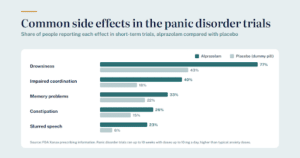
Sleepiness came out on top in both sets of trials. In the anxiety studies, 41% of people on alprazolam reported it, against 22% on placebo. In the higher-dose panic studies, it was 77% against 43%.
For a lot of people it eases after the first few days or weeks. Feeling groggy the next morning is common too, especially after an evening dose, because alprazolam stays in your body long after the calm wears off.
In the extended-release trials, 2% of people taking alprazolam were in a road traffic accident. Nobody on placebo was. The number is small, but it’s why the advice on driving is so firm: don’t get behind the wheel until you know how the medicine affects you, and never when you feel drowsy.
Coordination, Balance and Speech
In the panic trials, 40% of people on alprazolam had trouble with coordination, compared with 18% on placebo. Slurred or unclear speech, which doctors call dysarthria, showed up in 23% against 6%.
These problems tend to get worse as the dose goes up. For older adults they’re a real concern, since being a little unsteady can easily turn into a fall.
Memory and Concentration
A third of people in the panic trials (33%) reported memory problems, compared with 22% on placebo. Trouble focusing and slower thinking came up a lot as well.
The label also points out that the body barely adapts to these particular effects. Sleepiness often fades with time, but forgetfulness may not. If you’re losing track of conversations or forgetting what you were in the middle of, tell your prescriber. It’s not something you just have to put up with.
Light-Headedness and Low Blood Pressure
Feeling light-headed was common in the anxiety trials. Low blood pressure showed up in 5% of people on alprazolam, compared with 2% on placebo. Getting up slowly helps, especially first thing in the morning.
Dry Mouth, Constipation and Nausea
Dry mouth came up often in both sets of trials. In the panic studies, 26% of people on alprazolam were constipated, against 15% on placebo. Nausea was less common, showing up in 6% of people in the extended-release trials compared with 3% on placebo.
Appetite and Weight
This one can go either way, which surprises people. In the panic trials, 33% of people on alprazolam said they were hungrier than usual (23% on placebo), and 27% gained weight (18% on placebo). At the same time, 28% said their appetite dropped (24% on placebo), and 23% lost weight (17% on placebo).
So alprazolam doesn’t reliably push weight in one direction. It nudges appetite, and which way it goes depends on the person.
Sex Drive
Changes in sex drive showed up in both directions too. In the panic trials, 14% of people on alprazolam noticed less interest in sex, compared with 8% on placebo, and a smaller group noticed more. It’s an awkward thing to bring up, but it’s a fair question for your prescriber, and there may be options.
Side Effects That Need Attention
Mood Changes and Depression
Benzodiazepines can make depression worse. The label asks prescribers to be extra careful with people who have depression, including watching more closely for suicidal thoughts. It also describes episodes of hypomania and mania in some people with depression who took alprazolam. That can look like unusual energy, racing speech, and barely needing sleep.
Once in a while, alprazolam has the opposite of its intended effect. Instead of calming down, the person becomes agitated, irritable, aggressive or restless, or starts seeing and hearing things that aren’t there. The label notes that many of these reports involved people who were also taking other brain-active drugs, or who had other psychiatric conditions.
Any of these changes is worth a prompt call to your prescriber. If you’re having thoughts of suicide, call or text 988 to reach the 988 Suicide & Crisis Lifeline.
Breathing Problems
Alprazolam can slow your breathing, and the risk jumps when it’s combined with opioids, alcohol or other sedating drugs. The label also reports deaths in people with severe lung disease shortly after they started taking it. If you have COPD, sleep apnea or any other breathing condition, make sure your prescriber knows before you start.
Slow, shallow or labored breathing is an emergency. Call 911.
Effects in Older Adults
Older adults tend to get more of everything described above, especially drowsiness, confusion and unsteadiness. Their bodies also clear the drug more slowly, so the effects last longer.
Digoxin deserves a mention here. Alprazolam has been reported to raise digoxin levels, particularly in people over 65. If you or a parent takes digoxin for the heart, the prescriber should be checking those levels.
Rare but Serious Reactions
After the drug was approved, people taking alprazolam reported some less common problems. Reports like these are voluntary, so nobody can say exactly how often they happen, or always be sure the drug caused them. They’re still worth knowing about.
- Liver problems. These include hepatitis, raised liver enzymes, jaundice and, rarely, liver failure. Watch for yellow skin or eyes, dark urine, or pain under your right ribs.
- Serious skin reactions. Stevens-Johnson syndrome can start like the flu and then turn into a painful, blistering rash.
- Swelling of the face, lips, tongue or throat (angioedema). This is an emergency if it affects your breathing.
- Hormone-related changes. These include raised prolactin levels, breast enlargement in men, and milky discharge from the nipples.
- Other effects. Some people have had swollen legs or become more sensitive to sunlight.
If you notice any of these, get medical care right away.
Withdrawal Effects Are Side Effects Too
Some of the hardest side effects of Xanax show up when the dose is lowered or stopped. When people with panic disorder came off alprazolam, the label lists these symptoms as happening more often than with placebo:
| Symptom after stopping | How often |
| Trouble sleeping | nearly 30% |
| Light-headedness | about 19% |
| Anxiety | about 19% |
| Headaches | about 17% |
| Nausea or vomiting | about 16% |
| Diarrhea | about 14% |
Seizures have been reported after the dose was cut quickly or stopped all at once. That’s why coming off alprazolam should always be a slow, planned process with your prescriber, not something you do on your own.
Pregnancy and Breastfeeding
Taken late in pregnancy, alprazolam can leave a newborn sleepy or struggling to breathe. The baby can also go through withdrawal: jittery, irritable, crying a lot, and having trouble feeding. The label notes that observational studies haven’t found a clear link between benzodiazepines and major birth defects.
Alprazolam also passes into breast milk, and the label recommends not breastfeeding while taking it. If you find out you’re pregnant, call your prescriber, and don’t stop the medicine suddenly on your own.
Making Side Effects Easier to Live With
Tell your prescriber about side effects early. A lot of them can be eased by changing the dose, the timing or the form of the medicine, but that’s their call, not something to try yourself.
Leave alcohol out completely. It makes the drowsiness, the clumsiness and the breathing risk all worse.
If you feel light-headed, take your time getting up. And hold off on driving or using machinery until you know how you react, and skip it altogether on days you feel drowsy.
It can help to jot down what you notice and when. A few days of notes shows patterns that are hard to remember in an appointment.
Have the pharmacist check anything new you start, including over-the-counter sleep aids and allergy pills. A nighttime cold medicine or an allergy tablet can make you even sleepier on top of alprazolam, and that’s easy to forget when you grab something off the shelf.
If you want to report a side effect yourself, the FDA takes reports through its MedWatch program. You can call 1-800-FDA-1088 or go to fda.gov/medwatch.
When to Get Help
Call 911 right away if someone taking alprazolam is breathing slowly or shallowly, or seems to be struggling for air. Do the same if they’re so sleepy you can’t wake them, badly confused, or turning blue or gray around the lips. A seizure, or swelling in the face, lips or throat, also needs emergency help.
Some changes aren’t emergencies but still shouldn’t wait for your next routine visit. Call your prescriber soon if your depression seems to be getting worse, or your mood or behavior changes in a way that doesn’t feel like you. Call too if you notice yellowing skin or eyes, dark urine, or a new rash. Forgetfulness that’s causing problems at work or at home is worth a call, and so is a side effect that simply hasn’t let up.
Frequently Asked Questions
Does Xanax cause weight gain?
Some people gain weight on it, and others lose weight. The panic disorder trials saw more of both than placebo did, so it mostly comes down to how your appetite responds.
Can Xanax cause memory loss?
Memory trouble is one of the more common side effects, and it’s more likely at higher doses. According to the label, it often doesn’t wear off the way sleepiness does as your body gets used to the medicine. Bring it up with your prescriber if it’s bothering you.
Does Xanax cause headaches?
It can. Headaches showed up in the extended-release trials, and they were one of the more common complaints when people came off alprazolam.
Can Xanax make depression worse?
In some people, yes. Benzodiazepines can deepen depression that’s already there, which is why people with depression need closer follow-up while they’re taking it.
Will the drowsiness go away?
Often it does, over the first few days or weeks. If it’s still hanging on, or it’s getting in the way of work, driving or staying safe, tell your prescriber.
Can Xanax cause nausea?
Sometimes, though, it’s much less common than drowsiness. Nausea can also be a withdrawal symptom after a dose is lowered or stopped.
The Bottom Line
Most of what people feel on alprazolam is the calming effect reaching places it isn’t wanted. That shows up as sleepiness, clumsiness, slurred words and a patchy memory. The sleepiness often settles down over time, but the memory effects are more stubborn.
The serious risks are less common. They center on breathing, mood and withdrawal, and they get much bigger when alcohol or opioids are involved.
If something has changed since you started alprazolam, visit our pharmacy or speak with our pharmacist. We can help you sort out whether it’s the medicine and what to ask your prescriber.
References
- U.S. Food and Drug Administration. Xanax (alprazolam) tablets, prescribing information and Medication Guide (revised 1/2023), Adverse Reactions and Warnings sections. Drugs@FDA.
- U.S. Food and Drug Administration. Xanax XR (alprazolam) extended-release tablets, prescribing information, Adverse Reactions. Drugs@FDA.
- MedlinePlus. Alprazolam.
- U.S. Food and Drug Administration. MedWatch: The FDA Safety Information and Adverse Event Reporting Program.